Category: Tiny Snips

  • TS #48 – AR in the Building!

    TS #48 – AR in the Building!

    Consider this scenario – you are making a cable tower out of something like Play-Doh. Not that the end product may be sturdy enough, but if there appears any flaw, you can easily remold it back to how you actually want it to look like. But what if you’re going to make the same thing out of metal? It will be difficult to remold, but still possible as metals used for construction are mostly pliable.

    It won’t happen with something like concrete and lumber though, which are generally used to make most of the physical infrastructures. If there occurs any flaw with an actual infrastructural project, it can be expensive in terms of time and labor. An estimated 7-11% of construction project costs are spent on correcting errors.

    The product of a UK based company XYZ Reality – HoloSite – attempts to help the industry avoid the cost of rework by “Building it Right First Time“.

    HoloSite is an engineering-grade Augmented Reality(AR) solution that uses a headset to project a hologram of a 3D model representing what to be built, real-time, using AR. They claim the solution provides millimeter precision and proactive validation. The system uses a cloud platform, AR headset and propriety software that can be implement into current construction practices.

    While it may look like a glorified motorcycle helmet, the technology could ultimately save up to 11% of costs on building projects, the result of errors introduced between the architectural sketches and the finished buildings, the company says. These errors cost the industry between £10bn and £25bn a year in the UK alone.

    Sifted

    Our technology is the only solution that can be utilised to identify errors before they actually happen, in real-time, and prevent them from happening

    David Mitchell – CEO, XYZ Reality

    The company recently raised £20m in Series A funding. The product – HoloSite – has already been deployed in the construction of projects valuing more than £1.5bn, including in data centres, pharmaceutical facilities and airports.. The startup plans to use this latest raise to double its headcount over the next 18 months, to around 70 employees, and expand into the US.

  • TS #47 – A Messaging App from the FBI

    TS #47 – A Messaging App from the FBI

    With all the talk about how Google and Facebook and whatnot knowing your activity on or off the internet, one would think how do drug dealers and shady people get away with it? They actually use devices and services that are encrypted, making them particularly untraceable, unless, of course, the developer of the device/ service itself intends to spy on them!

    Back in 2018, the FBI took down an encrypted messaging service provided by a called Phantom Secure. This was one of the widely used services by criminals to stay under the radar. Soon after that, users of Phantom Secure turned to other services. This led to FBI thinking of starting something similar on its own.

    The F.B.I. recruited a former Phantom Secure distributor who had been developing a new encrypted communications system called Anom. The informant agreed to work for the F.B.I. and let the bureau control the network for the possibility of a reduced prison sentence, according to the court documents. The F.B.I. paid the informant $120,000, the documents said.

    New York Times

    Once the product was developed, they wanted someone to promote it. Brands use influencers and celebrities. The FBI and Australian Police USED an underground drug Kingpin in Australia – Hakan Ayik, who was referred to in Australian media as “the Facebook gangster”. Ayik was given a handset by undercover cops which he then went on to circulate with his associates.

    The operation, code named Operation Trojan Shield, had collected more than 27 million messages from about 12,000 devices in 45 languages, according to Associated Press.

    They also seized: –

    • 8 tons of cocaine and 22 tons of cannabis
    • 55 luxury vehicles
    • 250 firearms
    • $48+ million worth of various currencies and cryptocurrencies!

  • TS #46 – The Dire Need for Human Capital

    TS #46 – The Dire Need for Human Capital

    With the growing demand for products and the economy as a whole growing exponentially these days post the pandemic slump, the need for human capital is also on the rise. Companies are courting employees by either incentivizing, keeping the bar low for selection or any other means.

    Last week, Amazon made a consideration for marijuana smokers. “The company said it is changing its drug testing policy and will no longer screen some workers for cannabis” according to cnbc. It has also backed the Federal Bill to legalize marijuana.

    Employers like Hospitality Ventures, which runs businesses like Hilton and Marriott hotels, have also dropped marijuana testing to attract staff amidst this human-capital-crunch.

    Ride hailing companies like Uber had earlier announced a “stimulus” for drivers, basically a bonus, to get drivers to hit the road and run cabs. A total of $250 million was earmarked for this purpose.

    The proportion of US workers who tested positive for marijuana in urine climbed higher in 2020 according to Quest Diagnostics Inc., one of the largest drug-testing laboratories in the U.S.

    About 2.7% of the approximately seven million drug tests Quest conducted on behalf of employers came back positive for marijuana—up from 2.5% in 2019 and 2% in 2016.

    WSJ

  • TS #45 – Worlds Fastest Ai

    TS #45 – Worlds Fastest Ai

    On May 27 2021, a virtual ribbon cutting ceremony was held at the  Berkeley Lab’s National Energy Research Scientific Computing Center (NERSC) officially launching the worlds fastest supercomputer, Perlmutter.

    The system is named after Saul Perlmutter , an astrophysicist at Berkeley Lab who shared the 2011 Nobel Prize in Physics for his contributions to research showing that the expansion of the universe is accelerating.

    The Perlmutter system will help map out the map of the entire visible universe spanning 11 billion light years by processing data from DESI, which is capable of capturing as many as 5,000 galaxies in a single exposure.

    “In one project, the supercomputer will help assemble the largest 3D map of the visible universe to date. It will process data from the Dark Energy Spectroscopic Instrument (DESI), a kind of cosmic camera that can capture as many as 5,000 galaxies in a single exposure,”

    Dion Harris (NVIDIA) wrote in a blog post 

    The map of the universe isn’t the only project set up for Perlmutter. The supercomputer will also study atomic interactions to foster clean energy tech like biofuels.

  • TS #44 – Dr. Smart Toilet

    TS #44 – Dr. Smart Toilet

    The stool of a person can tell a lot about their gut health. But analyzing the stool is what is difficult for those who may have gastro-intestinal problems. This can lead to patients giving unreliable data for doctors to work on, which in turn reduced the effectiveness of the treatment. The researchers at the Duke University have taken a step in this direction.

    The Smart Toilet Technology is designed to be installed in the pipes of existing toilets and collect images of stools that pass through. The underlying AI algorithm is trained on more than 3000 unique images to stools to identify its characteristics. In their tests, it was able to accurately classify the stool 85 percent of the time.

    Julian Castro Thats Amazing GIF

    More here.

  • TS #43 – Cecilia – The Bartending Robot

    TS #43 – Cecilia – The Bartending Robot

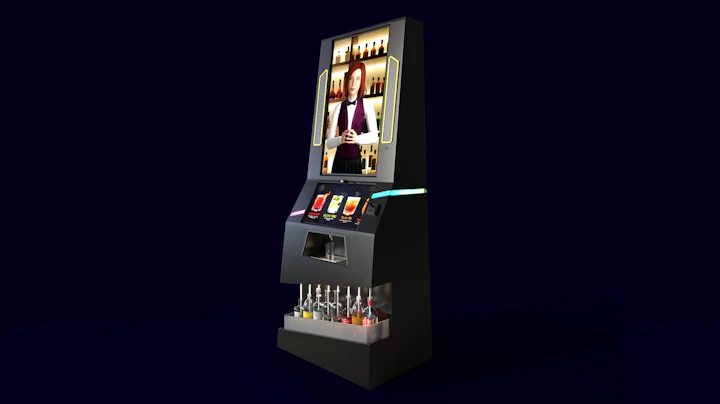
    Meet Cecilia.ai, the bartending robot. It is the first robot bartender that can interact and chat with customers, which it does using conversational AI and voice recognition software.

    Cecilia Ai Hero
    Source: Cecilia.ai

    Developed by people at Israel’s GKI Group, Cecilia is basically a vending machine capable of making customized drinks. The voice control features makes for contactless ordering. It is capable of making 120 drinks per hour and has the capacity to hold mix and alcohol ingredients in its back compartment up to 70 liters.

  • TS #42 – Anjali Sud – The Indian Who Reinvented Vimeo

    TS #42 – Anjali Sud – The Indian Who Reinvented Vimeo

    On May 25, Anjali Sud became the First Indian Woman to take a company public. Sud is the CEO of the video SaaS company Vimeo.

    Founded in 2004, even before YouTube, Vimeo was the first company to introduce the “like” button.

    Before she became the CEO in 2017, Vimeo was an ad-free video-media company playing catchup with Netflix and YouTube – it was investing in original content like Netflix and supporting creators like YouTube, all the while following a subscription model.

    In her first 90 days as CEO, Sud reinvented Vimeo from being a media company to a SaaS company. Instead of just investing in content, they shifted their focus to develop tools for creators to better create production grade videos. It has become the Tik-Tok for good quality videos. Now, instead of competing with YouTube, Vimeo even lets users publish videos created using their tools to other platforms like YouTube, Twitter et al.

    It has over 200 million Monthly Active Users and posted a 57% sales growth in Q1 2021. Vimeo boasts to be the biggest ad-free video platform in the world with less than 5 million videos. Though it is miniscule compared to about a billion videos on YouTube, videos in Vimeo are all of professional grade quality as it has stricter guidelines for acceptable videos.

    On May 25, Vimeo got listed in Nasdaq. Though the shares were down 13% at the end of the day, the CEO has high hopes for them down the line. Its valuation lingers around $8 Billion, 33% higher than the $6 billion it fetched from investors in January.